Tobruk: A Strategic Location Rooted in History and a Promising Logistics Gateway on the Mediterranean

The city of Tobruk holds a distinguished strategic and historical position on Libya’s eastern coast. Its geographic location overlooking the Mediterranean Sea, combined with its proximity to the Egyptian border, has played a significant role in strengthening its status as a maritime and logistics hub throughout different historical periods.

Tobruk’s importance became particularly evident during World War II, when the city and its port emerged as a central focal point in the North African campaigns. Control over Tobruk changed hands several times, and the city became the scene of one of the most notable battles and sieges of that era. The port served as a vital supply point for the forces controlling it, thanks to its coastal location and its ability to receive supplies by sea despite the conditions of siege and warfare. Encyclopaedia Britannica notes that Tobruk was among the locations that witnessed prolonged and significant fighting in the North African theater during World War II.
Key Historical Sites in the City of Tobruk and Its Surroundings

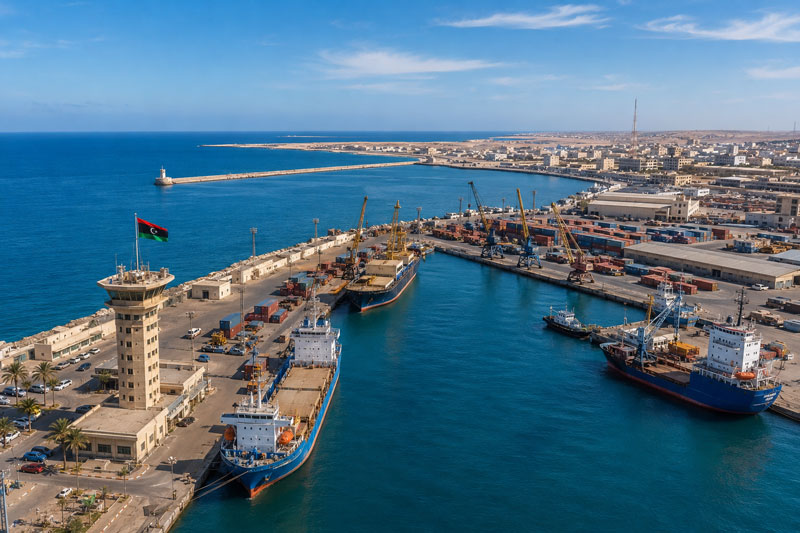
The Port of Tobruk is considered one of the city’s most important landmarks, not only as a maritime gateway but also as a key element of its strategic history. During World War II, the port played a significant logistical role, serving supply and provisioning operations. Its natural location on Libya’s eastern Mediterranean coast enhanced both its military and economic importance.

Today, this historical legacy forms an important foundation for the vision of the Tobruk Free Zone, which seeks to reposition the city’s maritime location to support trade, storage, re-export activities, and logistics services.

Tobruk Commonwealth War Cemetery

The Port of Tobruk is considered one of the city’s most important landmarks, not only as a maritime gateway but also as a key element of its strategic history. During World War II, the port played a significant logistical role, serving supply and provisioning operations. Its natural location on Libya’s eastern Mediterranean coast enhanced both its military and economic importance.

Today, this historical legacy forms an important foundation for the vision of the Tobruk Free Zone, which seeks to reposition the city’s maritime location to support trade, storage, re-export activities, and logistics services.

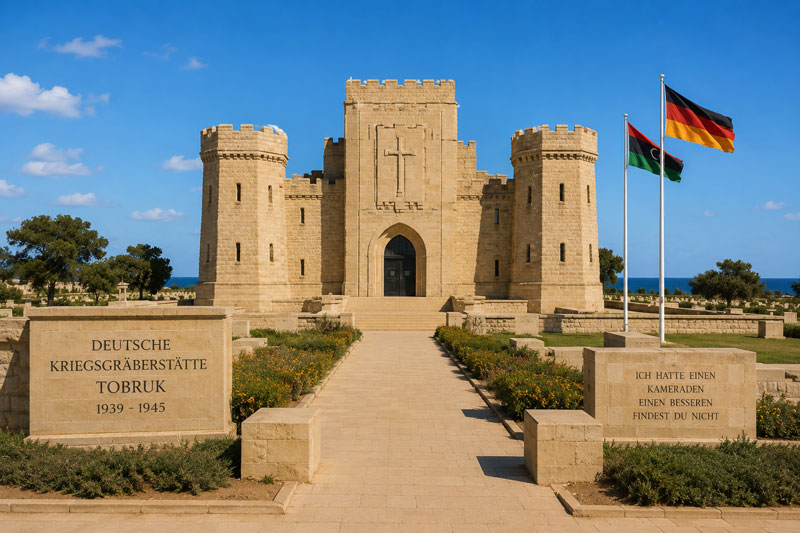
The German Cemetery, or “Tobruk Fortress”

The German cemetery in Tobruk is commonly known as “Tobruk Fortress” due to its architectural design resembling a fortified castle. It contains the remains of more than six thousand German soldiers who died during World War II and was officially inaugurated in 1955, according to the German War Graves Commission. This site is considered one of Tobruk’s most notable symbolic historical landmarks, combining military memory with distinctive architectural design and reflecting the scale of the events witnessed by the city during the war.

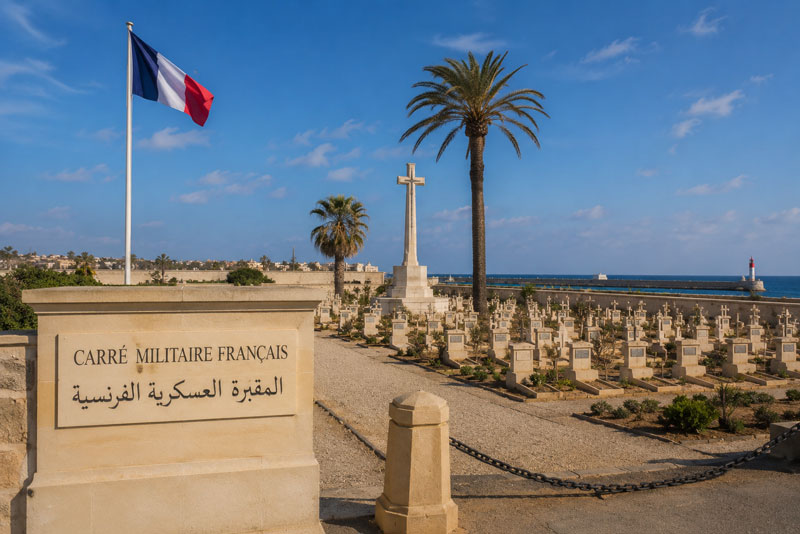
The French Cemetery

Tobruk also includes a French cemetery associated with World War II casualties. It contains the remains of French soldiers as well as North African troops who fought within the French forces during the battles of the Libyan desert and North Africa campaigns. Recent reports indicate that this cemetery forms part of the group of war cemeteries that distinguish Tobruk and document its wartime history.

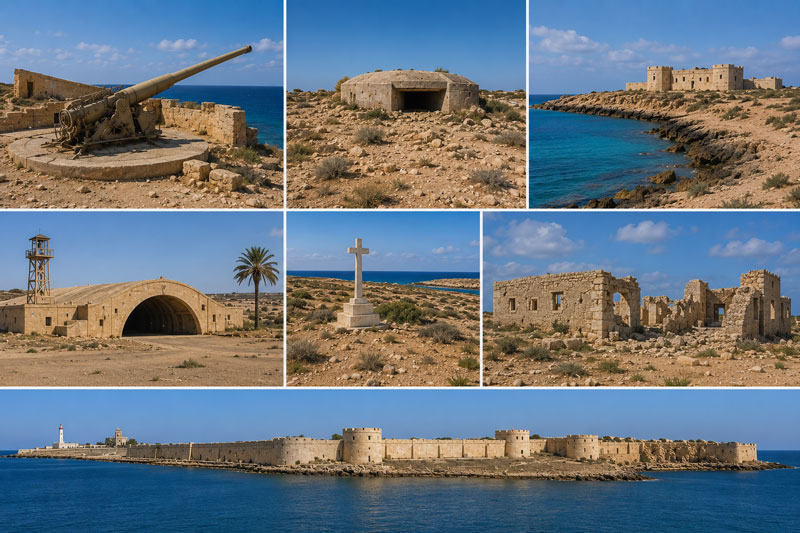
World War II Sites and Landmarks Around Tobruk

Tobruk’s historical memory is not limited to war cemeteries alone. It also includes defensive sites and remnants of military installations connected to the battles fought around the city. Historical and tourism sources indicate that Tobruk and its surrounding areas contain several World War II landmarks, including military sites, cemeteries, and locations associated with the Siege of Tobruk and the North African campaigns.
These sites can contribute to shaping the city’s identity as a historical center that combines military heritage, maritime significance, and logistical importance.

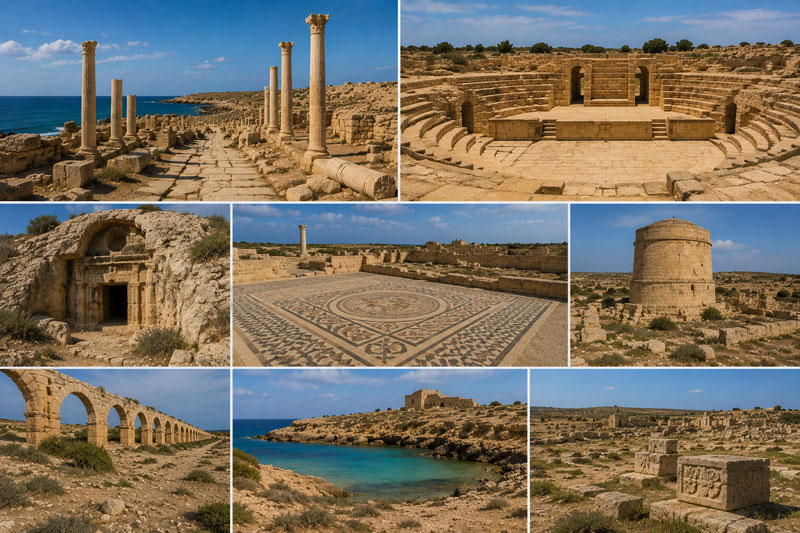
Older Archaeological Sites Around Tobruk

In addition to its World War II heritage, the area surrounding Tobruk also contains older archaeological and historical sites dating back to ancient civilizations that passed through eastern Libya. These sites reflect the region’s long-standing historical importance as part of Mediterranean trade and cultural exchange routes across different eras.